Lowering can cause serious problems
Lowering a car using lowering springs, a sports suspension, coilovers or air suspension is very popular. However, far from everyone realises what happens to the drivetrain and the severe consequences it can have.
At CVJoint24, we receive enquiries almost daily from customers stating that their new drive shafts have only lasted a few days or weeks, asking if we have any "heavier-duty parts". Some have even replaced them multiple times with the exact same outcome.
What we can rule out immediately is poor component quality. The root cause is almost always that the car has been lowered, modified, or simply has worn or broken suspension and mounting parts.
The most common cause of failure, by far, is that the car has been lowered—typically with lowering springs or coilovers. Next in line are worn or broken front suspension components, or a cracked engine or gearbox mount, which actually affects the driveline far more than most people realise.
Tuning the engine for more power is rarely the reason drive shafts or CV joints fail; it is far more frequently related to chassis geometry.
Why lowering damages drivetrain components
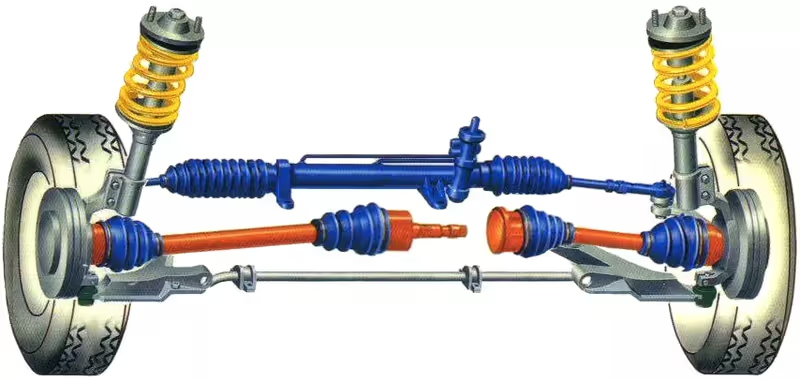
If an engine or gearbox mount is broken or severely worn, it can no longer keep the engine securely located during cornering. Instead, the entire powertrain assembly can shift several centimetres sideways—far more lateral movement than a drive shaft is designed to accommodate. When this happens, the drive shaft bottoms out, pressing its delicate needle bearings into the base of the inner CV joint. They can no longer slide smoothly, start to bind, and the result is severe driveline vibration that rapidly worsens.
The same applies to worn front or rear suspension bushes, as well as a broken road spring or damaged shock absorber, which creates exactly the same effect as lowering the car. Fitting coilovers often alters wheel alignment angles and lowers the vehicle far beyond what the standard drivetrain was engineered to withstand. Otherwise, the car manufacturer would have designed it that way from the factory.
This is also why factory-lowered sports variants are rarely lowered by more than 10–20 millimetres, and even then typically feature revised components including springs, dampers, control arms and bespoke drive shafts.
While lowering a vehicle can improve road holding, it also places significantly increased strain on the drivetrain.
Under normal circumstances, a drive shaft can never bottom out on a car with standard suspension struts, intact shock absorbers and sound engine and gearbox mounts, as the shaft simply cannot reach the bottom of the inner constant velocity joint.
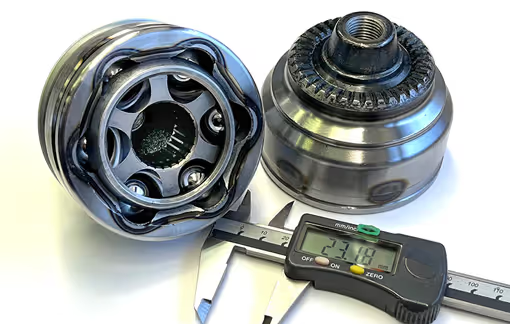
At CVJoint24, we are fully authorised by most manufacturers to dismantle inner CV joints for inspection when vibration issues are reported on a drive shaft. If there are impact marks in the bottom of the CV joint housing, it confirms that this is not a manufacturing defect, but rather a fault elsewhere on the vehicle.
This is why we always stress the vital importance of comparing the new drive shaft with the original part removed from the vehicle before fitting.